In all seriousness… there comes a point where we kinda stop “celebrating” these things.
But here is one of the more amusing things students have made me, from back in Season 5:1

…which went along with this cake:

- 2011-12 [↩]
After the first two days back from Spring Break,1 this is how I feel:
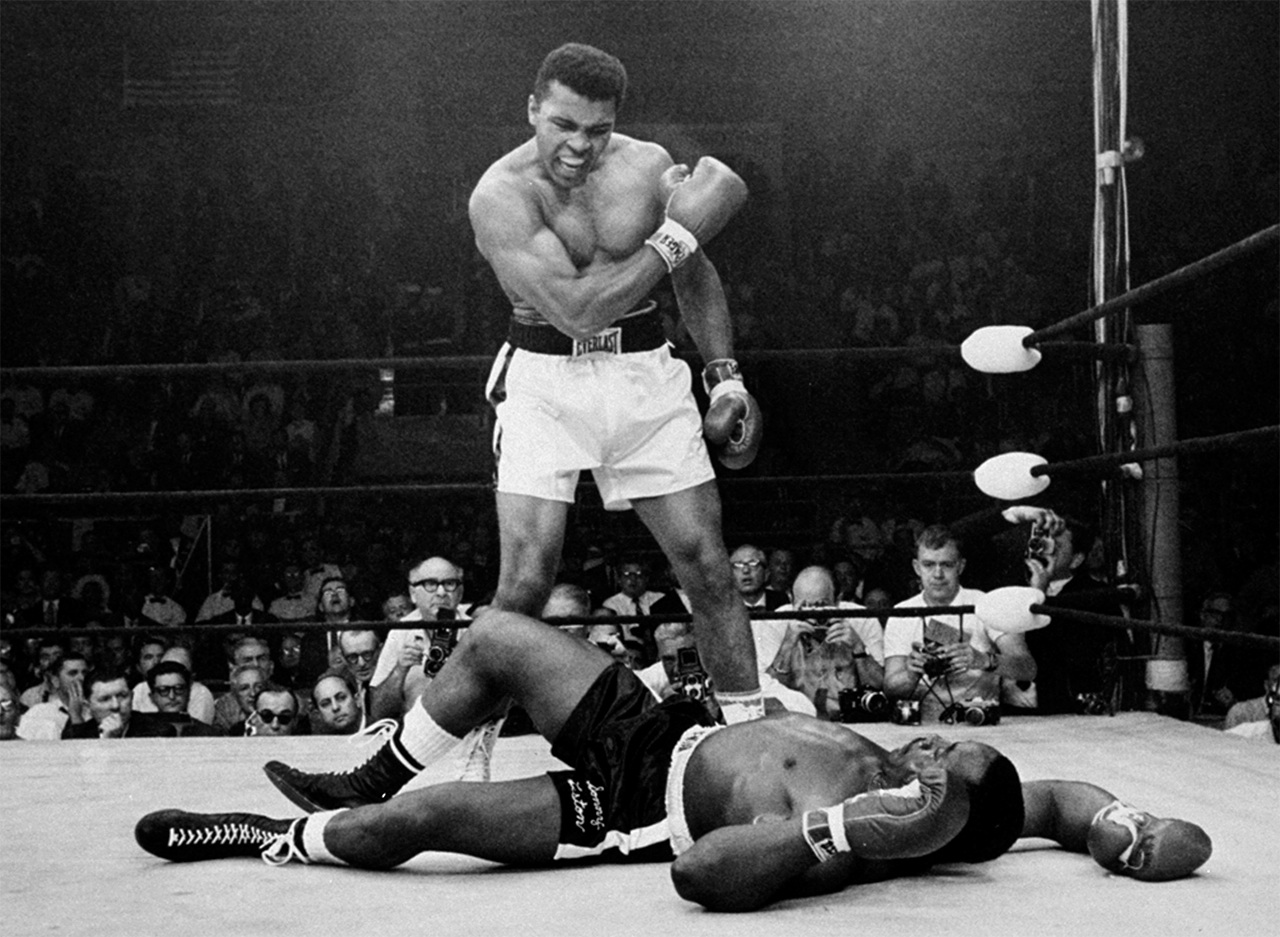
To clarify, I feel like Sonny Liston (the dude lying on his back, looking up at Muhammad Ali).
But at least we managed to keep the ship moving forward.
Well. Spring Break is over.1
No teacher is ready for work tomorrow.2

Almost seven months into the season, and the stretch run is upon us.
In two Fridays, we will be finished with the textbook for AP Stat.3
The AP Exam4 is in nine eight (on May 9).
Three Fridays after that we conclude Spring Finals.5

The end of this tunnel is just around the corner…
NOTE: After changing locations in 2014, the passing periods at my school are no longer 6 minutes — but rather 8. After briefly changing the title of my blog to reflect this, I decided that the title “six minutes of separation” just had a nicer “ring” — and also, the original title was a play on the phrase “six degrees of separation — so I changed it back. This post was written when I worked at a school at which they were six.
In case you’re curious about the significance of the time denomination in the sub-title of this blog, there’s a very simple explanation:
Six minutes is the length of the passing periods at our high school.

If you’re unfamiliar with the way schools generally work: This is the amount of time that students have in between classes to get from one locale to the next.1 2
That’s if you’re a student.
For us teachers, six minutes is all the separation that we get to catch our breath and collect ourselves.
Rough morning class push you to the verge of breaking down in tears? 3 Take six minutes, buck up, and head back out to the battlefield!
Six minutes is also all we get to run to the restroom in between classes.4

Up until a couple of years ago, the passing periods used to be 7 minutes (and there would be a “warning” bell at the 6 minute mark), but when the current leadership team took over in 2011, one of the first changes they made was shortening the passing periods to 5 minutes.
The reaction? Think: New Coke, 1985.5
About a month or so into the campaign, the admin team kindly gave us back a minute, to make it an even 6. 6
Back in the days of “seven minutes of separation”, I used to be able to make it down to the teacher’s lounge, brew up a new pot of coffee, fill up my coffee mug, and make it back to my class in time for the tardy bell — all without breaking a leisurely stride. When the passing periods were shortened to 5 minutes7, this was no longer possible. 8
That’s when I decided that I needed to invest in one of these:
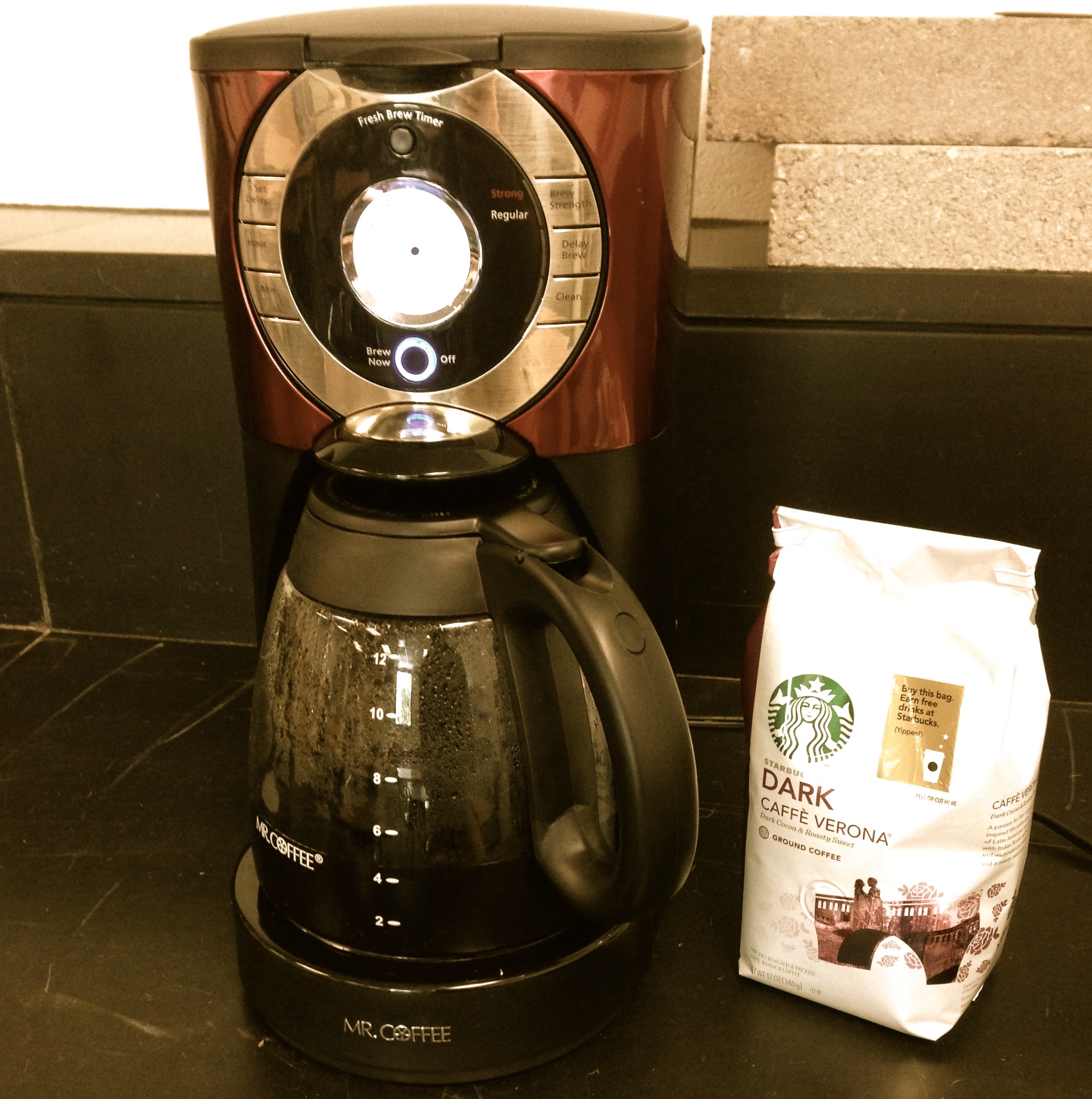
I also have a microwave9 now to complement the coffee maker10 but NOT a refrigerator.11
I do NOT think that a one-week Spring Break is long enough.1

I discovered very early on in my teaching career that Spring Break is WAYYYY tougher to come back from than Winter Break. It’s been that way for me every year since Season Zero2 and I expect this year3 will be no different.

Breakdown:
WINTER BREAK (2 weeks): Long enough to crash, hit rock bottom… and then bounce back. By the end of the two weeks, you’re ready4 to get back to work.
SPRING BREAK (1 week): Just long enough to crash and hit rock bottom. Before you have a chance to bounce back, you are simultaneously teaching 1st period on Monday morning and feeling like roadkill.5
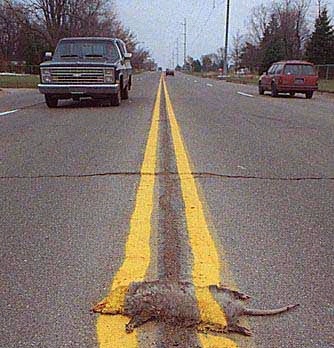
Coming back after exactly one week off is like waking up a slumbering bear in the middle of its hibernation — scientifically, not sound; practically, just a bad idea. 6

Last Friday before the break,7 we finally broke these out:
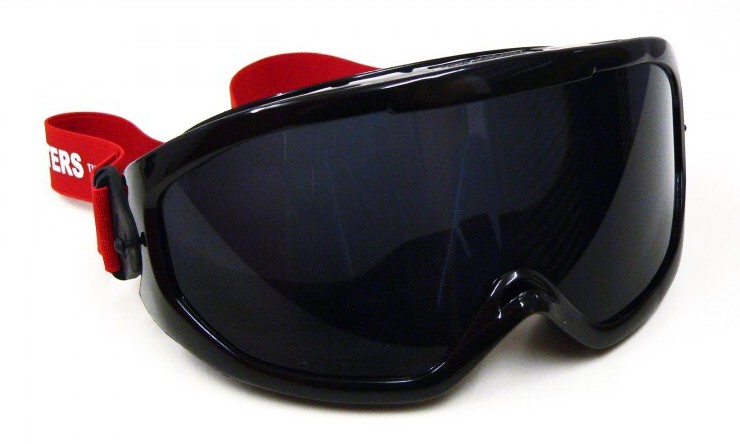
I’ve actually had these for a couple of years but this is the first year that I managed to find the opportunity to use them. Sadly, only the 13 B-day students who showed up to school that day8 got to experience them.
Here’s the idea:
Each student performs the 9-step walk-and-turn field sobriety test9 twice — once “sober”10 and then again while “intoxicated”.1112 They do this along a piece of blue tape that I lay out on the floor down the center aisle of our classroom. They have to step heel-to-toe without wobbling or stumbling or using their arms to balance. The rest of the class counts the number of “infractions” each student makes, and then we use the data to perform an inference procedure or two.
Which is all great and fun, but… I quickly discovered that if you give these kids some drunk goggles and a little free time on a Friday afternoon, you’d be amazed at what they come up with.13
 [↩]
[↩]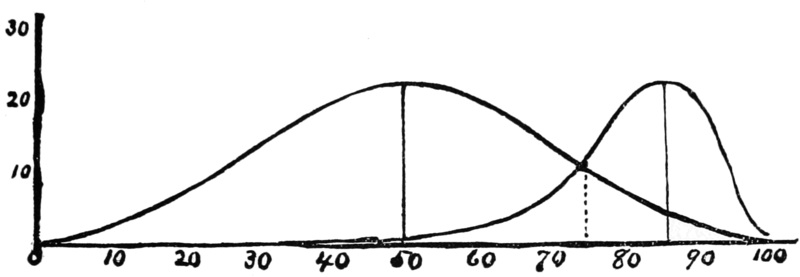
While I rarely employ curves on exams in “traditional” math classes, Statistics is a very special beast. And in AP Stat, I’ve explored a variety of flavors, including (but not limited to):
The fact that I’m blogging about curves the day that I graded our 2nd major exam over statistical inference?
Total coincidence, of course.